
Guiding decisions through the design process
Design decisions do not all need to be made at once.
One of the most common worries we see from clients is the fear of making the wrong decision too early, or feeling overwhelmed by how many choices there seem to be at the start of a project.
Our process is deliberately structured to guide decisions in stages. Each decision is made with the right amount of information, at the right time, and in the right context.
You do not need to arrive with all the answers. That is what the process is for.
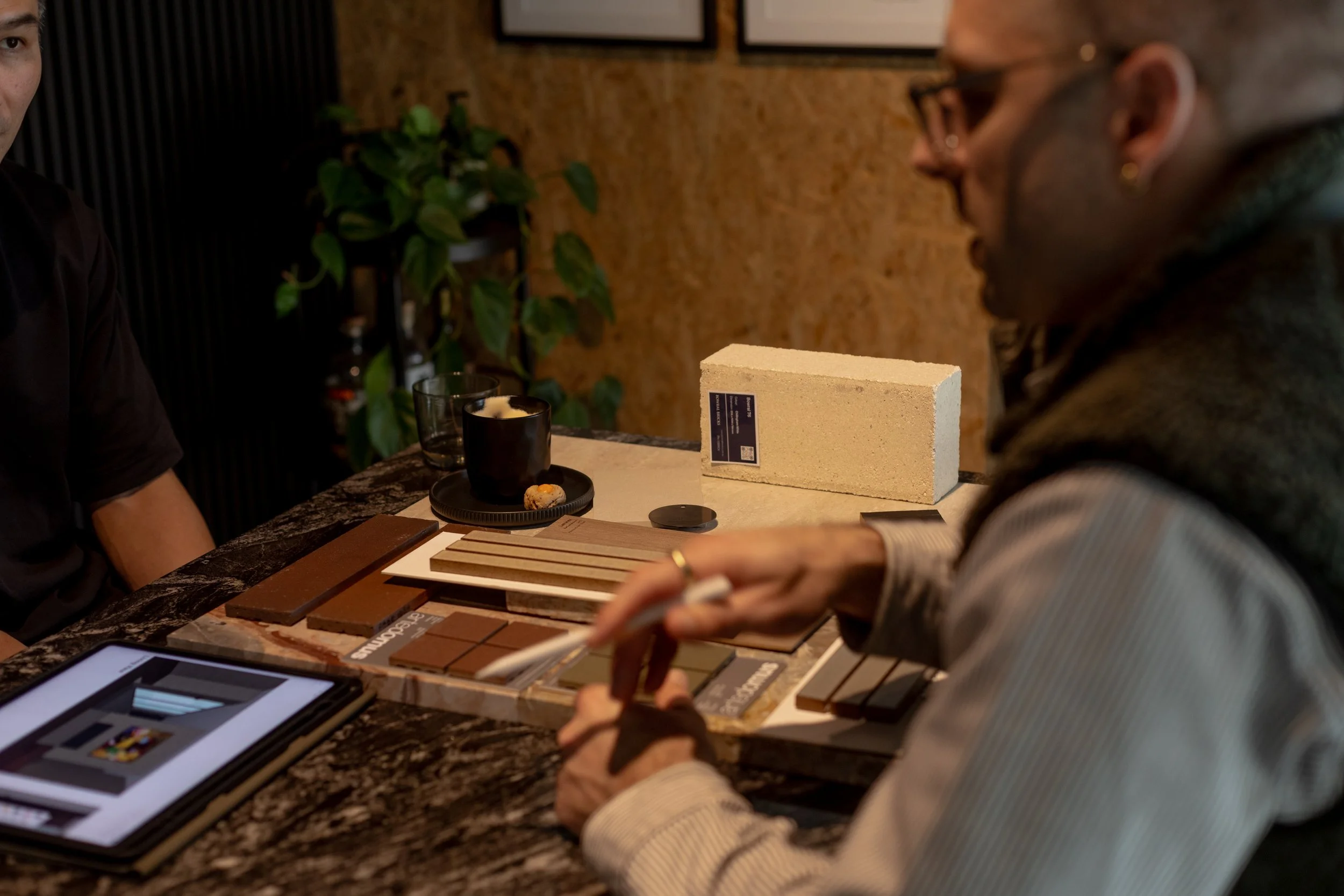
Why sequencing matters
Not all design decisions carry the same weight.
Some choices influence almost everything that follows. Others are more flexible and can evolve. Understanding this difference is important because it allows early energy to be focused where it matters most, rather than spread thinly across too many decisions at once.
By slowing down the early stages and being clear about what we are solving first, the later stages feel calmer and more considered.
What we focus on early
Early in the design process, we concentrate on the decisions that shape the entire project. These are typically the choices that are difficult or costly to change later.
This usually includes:
How the home sits on the site
Orientation, light, and ventilation
Overall layout and circulation
How your family moves through the house day to day
The relationship between spaces and functions
These decisions form the underlying structure of the house.
Once they are resolved, many other choices begin to fall into place in an natural and organic way.
How this reduces pressure later
When the fundamentals of your project are resolved early, later decisions tend to feel more grounded and sure.
Material selections, window sizes, shading, joinery layouts, and even furniture placement are all informed by the earlier work and decisions. Rather than revisiting foundational decisions repeatedly, the design is able to progress with clarity and confidence.
This approach does not remove choice, but it does remove unnecessary urgency.
You are not expected to know everything upfront
It is common for clients to feel that they should arrive at the first meeting with firm answers. In practice, that is rarely the case.
What is more helpful is an understanding of how you live, what is not working in your current space, and what you value most in day to day life. From there, the design process provides structure and guidance.
Our role is to help you navigate decisions in a way that feels steady and informed, rather than rushed or overwhelming.
A written reference
We have documented this approach in a short guide that explains how decisions unfold across the design process.
If you would find it helpful, you are welcome to receive a copy below